When disaster strikes, recovery begins with urgent needs: food, shelter, safety, and stability. But the work of rebuilding lasts much longer.
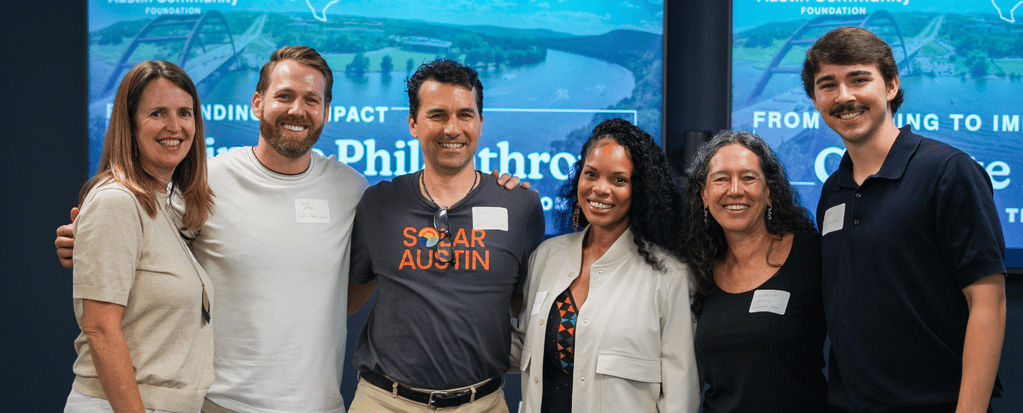
That was the focus of Austin Community Foundation’s recent donor briefing on Kerr County flood relief, hosted in partnership with the Community Foundation of the Texas Hill Country. The event brought together ACF fundholders and Austin-area donors to hear directly from leaders guiding recovery efforts after the devastating July 2025 floods.
The briefing featured Austin Dickson, CEO of the Community Foundation of the Texas Hill Country, followed by a fireside chat with Dr. Julie Kaplow, executive vice president for trauma and grief programs and policy at the Meadows Mental Health Policy Institute, moderated by Meagan Longley, chief impact officer at ACF.
The conversation offered a powerful reminder: disaster recovery is not a single moment. It is a long-term commitment to helping people return home, access ongoing care, rebuild community life, and prepare for the future.
From Rapid Response to Long-Term Stability
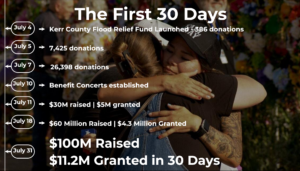
In the first weeks after the floods, support came together at an extraordinary pace. Within the first month, the Kerr County Flood Relief Fund raised $100 million and deployed $11.2 million in emergency grants to help meet urgent needs. Tens of thousands of donations helped provide food, shelter, and stability for families navigating unimaginable loss.
That direct connection between donors and families continues to shape what recovery looks like over time. As needs evolved, the Community Foundation of the Texas Hill Country organized its recovery efforts around four priorities: housing, mental health and well-being, community and culture, and future long-term needs.
“These are people that make up our community,” he said. “These are people that, without our assistance, would have quit and would have moved away.”
Housing quickly became the most urgent need, including temporary housing through local rentals, home repair partnerships, and down payment assistance for families who cannot return to their homes. Dickson described the down payment assistance program as one of the more innovative approaches emerging from the recovery effort because it helps people stay in the community they call home.
To keep the community together, the Community Foundation of the Texas Hill Country committed $50 million to help families return home through temporary housing, repairs, and new pathways to stable housing. At the time of the briefing, approximately ten months after the floods, hundreds of people were still relying on temporary housing—largely made possible by charitable donations.
Mental Health is Central to Recovery
One of the clearest themes from the briefing was the importance of mental health.
The Community Foundation of the Texas Hill Country established the Family Mental Health Care Fund in partnership with the
Meadows Mental Health Policy Institute and committed $10 million to ensure people affected by the floods can access mental health services that are trauma-informed, evidence-based, and easy to reach.The fund has granted $3.9 million of that total to 16 organizations across Texas, including the Austin Child Guidance Center and The Christi Center, to support Austin-area children and families.Dr. Kaplow also emphasized that mental health needs often increase one to two years after a tragedy, even as public attention begins to fade.
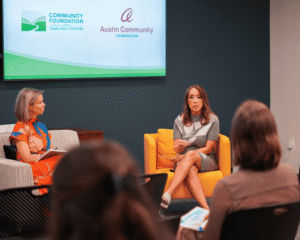 During the fireside chat, Dr. Kaplow shared that trauma and grief require specialized care, especially for children and families who lost loved ones. Meadows conducted a rapid mental health needs assessment, interviewing dozens of stakeholders to better understand available resources, unmet needs, and training gaps across affected communities.
“There’s a mistaken notion that after one year, you should be moving on or getting over it,” Dr. Kaplow said. “The reality is that the one-year mark, especially for many families, is actually the hardest time because the reality of those losses really starts to set in.”
Dickson echoed that perspective, emphasizing that mental health is one of the most important long-term investments philanthropy can make after a disaster. The work will extend well beyond the first year of recovery.
Rebuilding Communities
Relief efforts have supported nonprofit partners, small businesses, volunteer fire departments, school districts, parks, and other community assets. In the early days, that included everything from helping volunteer fire departments access supplies to helping Ingram ISD after its administration building, records, and computer systems were destroyed just weeks before school began.
Small businesses are also central to the region’s recovery. Dickson noted that in rural communities, small businesses often have five employees or fewer and serve as major economic drivers. When business owners are personally affected by disaster, the local economy becomes even more fragile.
Environmental recovery is another major focus. More than $14 million has been committed to restoring the Guadalupe River ecosystem and rebuilding the spaces that anchor community life. That includes work to plant native trees and seeds, stabilize riverbanks, and support long-term stewardship of the river to prevent future disasters.
These investments do more than rebuild what was lost—they help communities regain a sense of stability, connection, and hope.

The Role of Community Foundations in a Crisis
The briefing also underscored the unique role community foundations play in times of crisis: bringing people together, mobilizing resources quickly, and staying focused on long-term progress.
Beyond funding recovery, the Community Foundation of the Texas Hill Country has helped convene partners, communicate with the public, and connect people to the support they need.
“One of the things we’ve learned in this disaster is you must, must communicate,” Dickson said, describing the foundation’s role in helping the community understand what to expect, where to turn for help, and how recovery funds are being used.
Community foundations also help organize philanthropy to fill critical gaps. While federal assistance for flood survivors fell short of what most families needed to recover, funding from donors has helped families stay in their communities and move toward stability.
Thank You to Our Donors
The Kerr County Flood Relief Fund received $9.5 million from more than 1,300 donors in the Greater Austin area, including Austin Community Foundation and our fundholders.
To everyone who has supported this work: thank you. Your generosity is supporting families as they return home, expanding access to mental health care, helping small businesses recover, restoring the environment, and strengthening communities for the long term.
What Comes Next
Recovery is still unfolding—and staying informed and engaged is one of the most meaningful ways to support it.
Donors can continue to follow recovery efforts by subscribing to the Rebuild Kerr newsletter for weekly updates and community stories from the Hill Country.
You can also connect with Austin Community Foundation to explore ways to support ongoing receovery and invest in disaster preparedness across Central Texas.
Together, we can help ensure that recovery continues—and that communities are stronger and better prepared for the future.